One Question Stops the Hearing — Kennedy’s Words Leave Schiff Silent-thuytram
The exchange had been unfolding with familiar rhythm, statements delivered, responses queued, the chamber moving along as if on rails.
Voices overlapped briefly, then settled, the usual choreography of modern political debate playing out in real time.
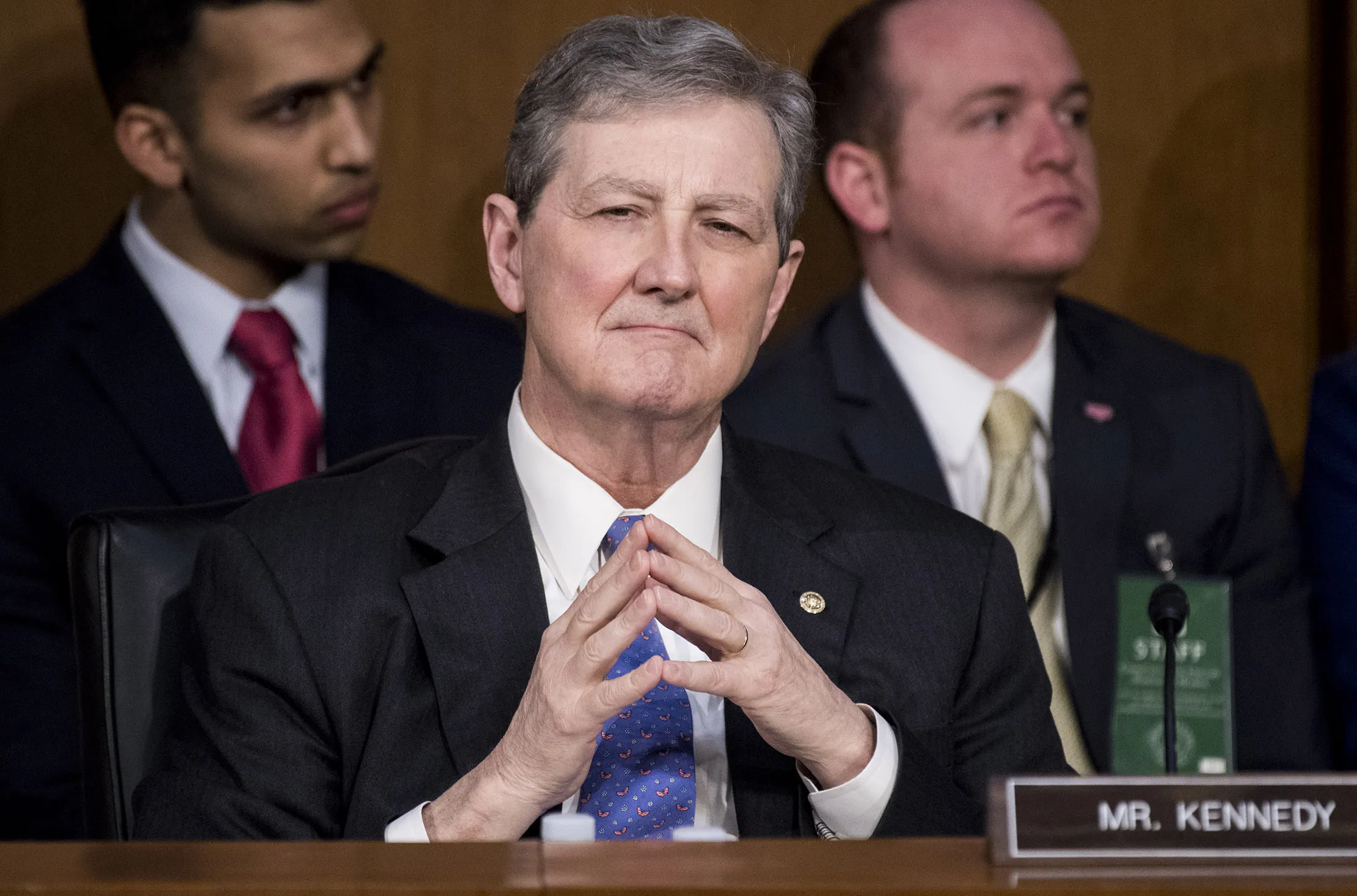
Senator John Kennedy sat quietly through most of it, listening without signaling urgency, his posture relaxed but alert.
He did not compete for airtime.
He did not interrupt.
He watched.
Adam Schiff spoke with confidence, laying out his position with practiced fluency, his tone suggesting the framework of the discussion was already secure.
For several minutes, nothing disrupted that sense of control.
Then Kennedy leaned forward.
There was no dramatic motion, no raised hand or verbal cue, just a subtle shift toward the microphone that almost went unnoticed.
He asked one question.
It was short.
It was precise.

It carried no accusation, no sarcasm, and no emotional charge.
Yet the effect was immediate.
The room stopped.
Schiff looked up, eyes briefly widening as he registered what had been asked.
Then he looked down again, scanning notes that suddenly seemed less helpful than they had moments earlier.
No answer followed.
The silence that settled over the chamber was not awkward in the way pauses often are on live television.
It was unmistakable.
Heavy.

Intentional.
Kennedy did not repeat the question.
He did not clarify it or soften it.
He waited.
That decision changed the moment entirely.
Side conversations ceased.
Papers stopped rustling.
Even the moderators hesitated, uncertain whether intervention would relieve the tension or expose it further.
They chose stillness.
Observers later noted that Kennedy’s question did not introduce new facts or allegations.
It simply required alignment between statements made earlier and positions being asserted now.
That alignment did not arrive.
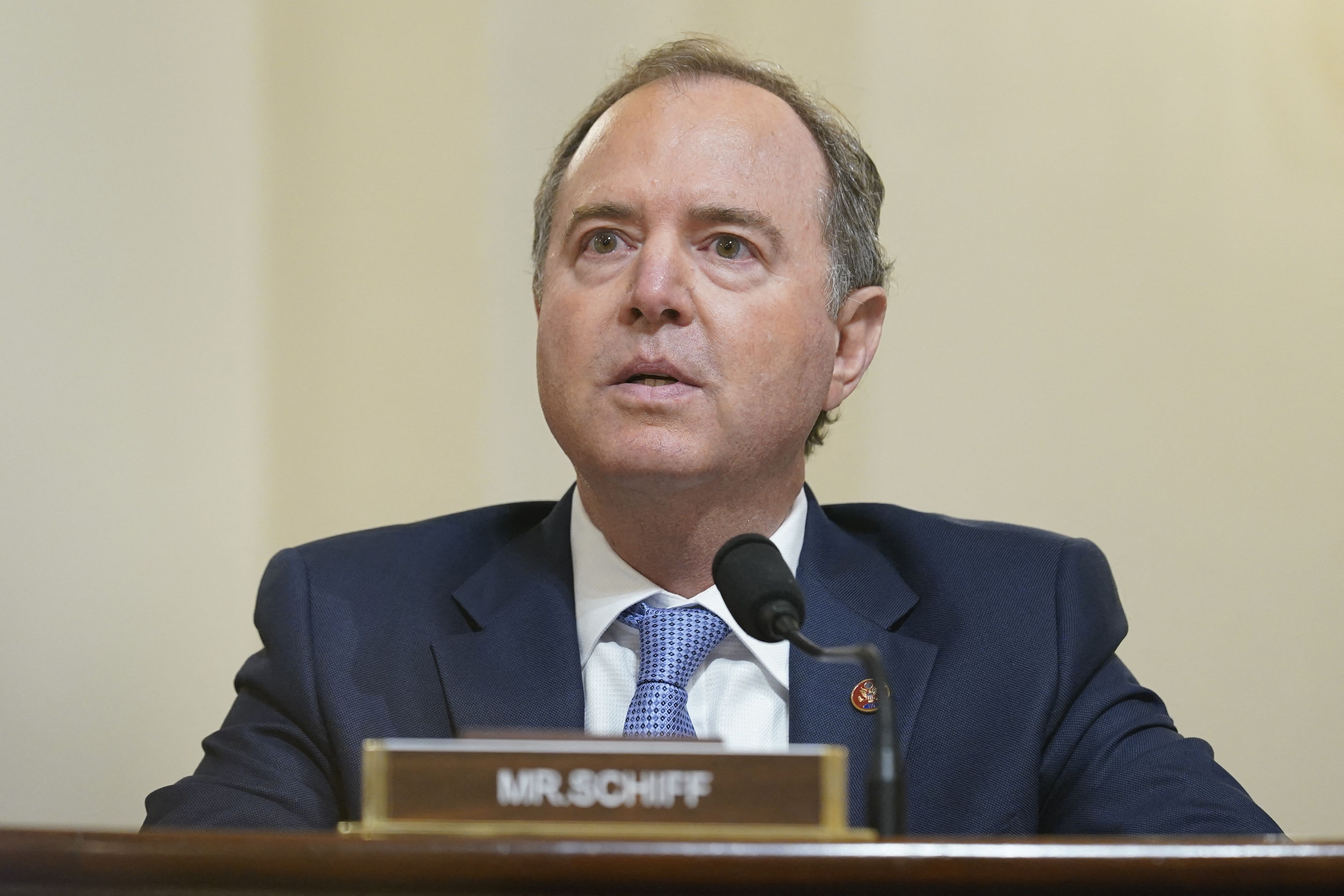
Schiff adjusted in his seat, lips parting slightly as if to respond, then closing again as he reconsidered.
The pause stretched long enough for everyone present to feel it.
When he finally spoke, the response was cautious, shorter than before, and notably detached from the confidence that had carried him earlier.
The dynamic had shifted.
The exchange was no longer a debate.
It had become an evaluation.
Analysts watching live described the moment as a pivot, the point where tempo replaced volume as the deciding factor.
Kennedy had not challenged Schiff directly.
He had changed the pace.
Social media reacted almost instantly once clips began circulating.
Viewers replayed the same seconds repeatedly, focusing less on the wording of the question and more on the silence that followed it.
Some interpreted the pause as hesitation.
Others saw it as recalculation.
Supporters of Kennedy praised the restraint, arguing that allowing a question to breathe often reveals more than forcing an answer.
Critics cautioned against overreading live reactions, reminding audiences that silence does not equal concession.
Still, few denied that something had changed in the room.
The remainder of the session reflected that shift.
Responses slowed.
Language became more careful.
The earlier ease did not return.
Kennedy did not revisit the question.
Schiff did not circle back to it.
Both appeared to recognize that the moment had reached a boundary that did not require further pressure.
Commentators later discussed why such moments resonate so strongly.
In an environment saturated with noise, silence feels disruptive.
When a question cannot be answered cleanly, the pause itself becomes information.
This exchange illustrated that principle with unusual clarity.
Kennedy’s approach relied on timing rather than confrontation.
He waited for the precise beat when the question would land with maximum weight.
He asked it once.
Then he allowed the room to respond in its own way.
The silence did not humiliate.
It exposed uncertainty.

That exposure lingered longer than any rebuttal might have.
Media analysts compared the moment to past hearings where a single question altered the trajectory of an entire discussion.
They noted that such pivots rarely come from aggression.
They come from framing that forces reconciliation between words and records.
As the clip continued to spread, captions emphasized the same thing again and again.
Not the question.
The silence.
Comment sections filled with debate about what it meant.
Some argued it demonstrated the power of disciplined questioning.
Others warned against turning pauses into verdicts.
What remained consistent was recognition of the shift itself.
The chamber had felt it.
The audience had felt it.
Even those watching later felt it through the screen.
Kennedy’s role in the moment remained understated.
He did not claim victory.
He did not summarize afterward.
He let the silence stand as its own conclusion.
Schiff continued participating, but with altered cadence and narrower claims, the earlier momentum clearly tempered.
The question had done its work.
In Washington, such moments are rarely announced.
They emerge quietly, when preparation meets opportunity.
Kennedy’s question landed not because it was dramatic, but because it was unavoidable.
It required either alignment or pause.
The pause came.
And that pause became the moment everyone noticed.